

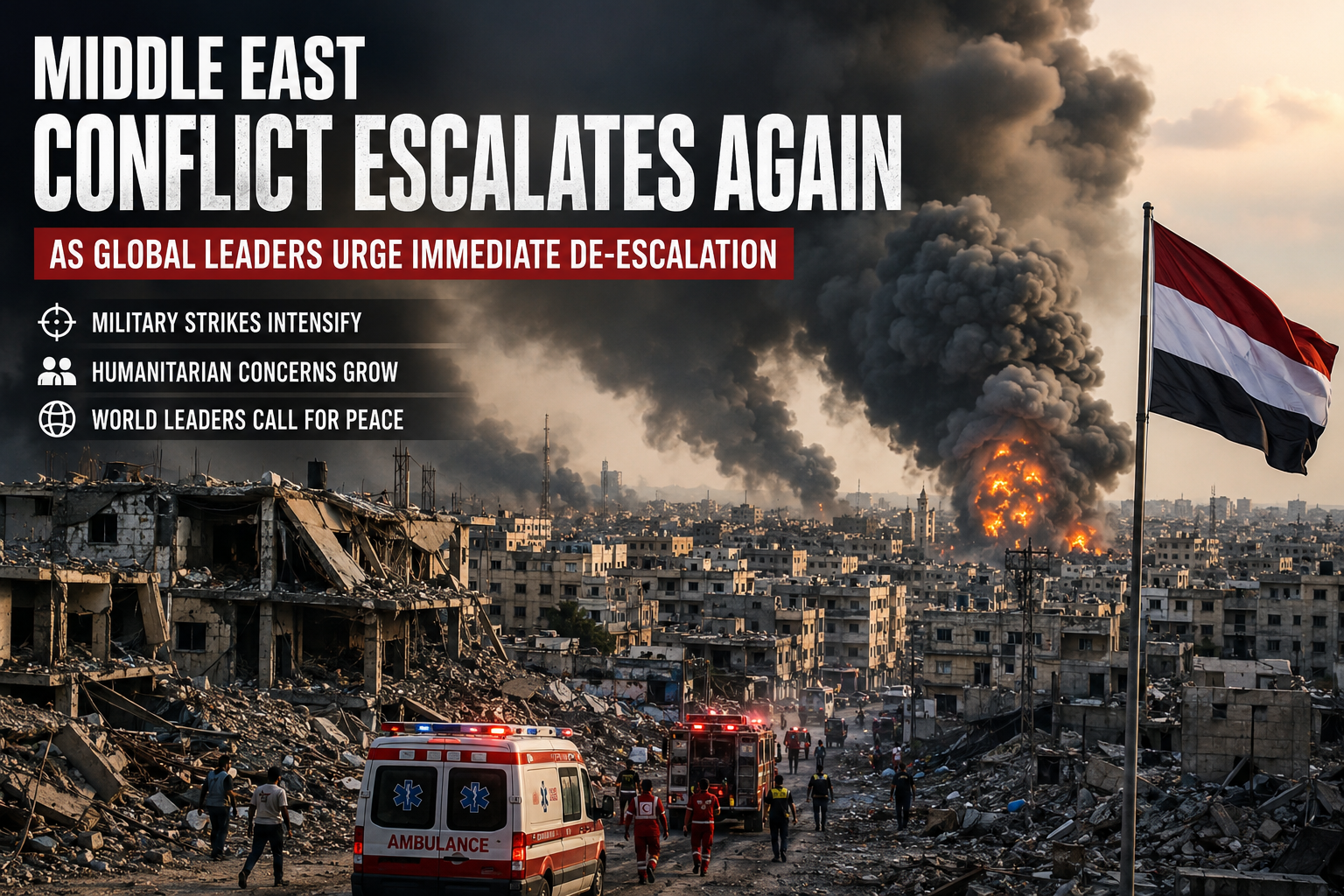
Renewed military tensions in the Middle East have once again placed the region at the center of international attention. Over the past several days, exchanges of military strikes and heightened security alerts have raised fears of a broader regional conflict. Governments across the world are closely monitoring the situation while urging restraint and renewed diplomatic dialogue. Recent reports indicate that military operations have expanded, increasing concerns over regional stability and the safety of civilians.
Rising Military Tensions Across the Region
The latest escalation follows renewed military operations involving the United States and Iran, accompanied by additional security measures throughout the Gulf region. Strategic waterways and military installations have become focal points, increasing the risk of disruption to international trade and energy supplies.
Several neighboring countries have strengthened air defenses and increased military readiness as governments prepare for possible spillover effects. International observers warn that further escalation could affect both regional and global security.
Strategic Importance of the Strait of Hormuz
One of the primary concerns remains the Strait of Hormuz, one of the world’s most important maritime routes for oil transportation. Any prolonged disruption could significantly impact global energy markets and international shipping.
Analysts note that continued instability in this strategic corridor may contribute to increased transportation costs and volatility in global commodity prices.
Energy Markets Closely Watching Developments
Global oil traders continue to monitor military movements and diplomatic negotiations. Market uncertainty has already contributed to price fluctuations, with economists warning that prolonged instability could slow economic growth and increase inflationary pressure worldwide.
Humanitarian Concerns Continue to Grow
Humanitarian organizations have expressed growing concern over the impact of renewed fighting on civilian populations. Damage to infrastructure, disruptions to essential services, and displacement remain significant challenges in affected areas.
Aid agencies are urging all parties to respect international humanitarian law and ensure safe access for emergency relief operations.
International Organizations Call for Protection of Civilians
The United Nations and several governments have emphasized the importance of protecting civilians and preventing further humanitarian deterioration. Diplomatic channels remain active as international mediators seek opportunities to reduce tensions and encourage negotiations.
Global Diplomatic Response
World leaders have intensified diplomatic engagement in an effort to prevent the conflict from expanding beyond the region. Several countries have called for immediate dialogue while reaffirming their commitment to regional stability.
Security experts believe that sustained diplomatic efforts will be critical in reducing the risk of wider confrontation and protecting global economic interests.
Economic Implications Beyond the Region
Beyond military concerns, economists warn that prolonged instability could affect international trade, financial markets, and inflation. Businesses dependent on global supply chains are closely monitoring developments as governments evaluate contingency measures.